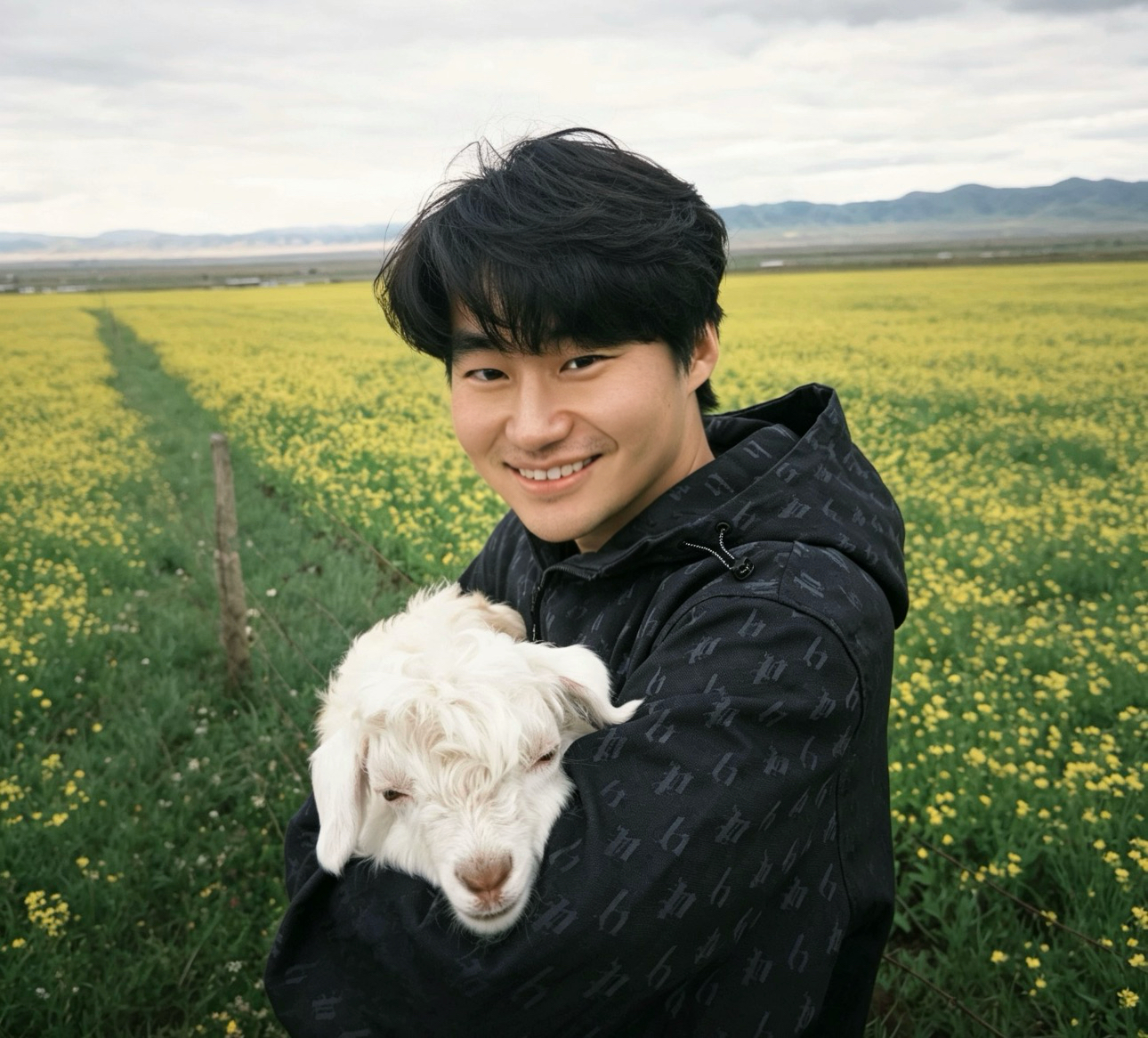
Yang Hu
胡 杨 / jʌŋ: hu /
HCC researcher / Game engine developer / Game designer
I am a Ph.D. Candidate and research assistant in the CUGAME Lab at Clemson University's School of Computing, where I work under the supervision of Dr. Guo Freeman.
Prior to joining Clemson, I earned my M.S. in Game Science and Design from Northeastern University (Boston, USA) and my B.S. in Computer Science from the University of Arizona (Tucson, USA). My technical background spans multiple areas of interactive technology, including game engine development (e.g., custom 2D and 3D game engines built from the ground up), VR systems (e.g., VR applications in Unity), eye tracking (e.g., eye-tracking hardware and software on desktop and VR platforms), and digital fabrication (e.g., Arduino, 3D printing, and laser cutting for rapid prototyping).
My research explores how emerging technologies mediate and transform people's digital social experiences. I examine how platforms and interactive systems (e.g., virtual reality, online live streaming, and artificial intelligence) diversify the ways people connect, create, and play with each other. My work aims to understand and design mediated social experiences that bridge technological divides, strengthen connections, and diversify social engagement.
My dissertation research investigates:
(1) How cross-reality systems can address "VR social isolation", a phenomenon where VR users feel disconnected from people outside VR, both in everyday digital spaces (e.g., others on 2D screens) and in the physical world (e.g., co-located friends). I investigate how to design novel VR interfaces and interactions that bridge VR environments with everyday 2D technologies (e.g., smartphones, tablets, and desktops), allowing people without specialized VR hardware to meaningfully interact and connect with VR users.
Beyond my dissertation, I also explore broader platform and system design questions, such as:
(2) How VR's spatial computing environment can address 2D screen-based "attention monopolization", a phenomenon where traditional software competes for limited display space through designs that prioritize exclusive attention capture and prolonged user engagement. I investigate how VR's volumetric display space can diversify software design criteria beyond conventional metrics and facilitate a healthier digital experience.
(3) How interactive and game-integrated live streaming can address "gaming initiation anxiety", a phenomenon where players, despite having time available, hesitate to start a game because of the psychological commitment needed to reach an optimal play state (e.g., entering "flow"). I explore how streaming platforms can evolve to blur the traditional boundaries between spectating and playing, creating a new mediated experience that supports high engagement and interaction while requiring less psychological commitment.
My favorite video game is Terraria.
Recent News
Attended my first CSCW (CSCW 2026 in Salt Lake City, USA) to participate in the Doctoral Consortium, and also served as the Design Chair and a Student Volunteer for the conference.
My co-authored paper won the Best Paper Honorable Mention Award at FAccT 2026!
Attended CHI 2026 in Barcelona, Spain to present my first-authored and co-authored papers.
Attended DIS 2025 in Funchal, Portugal, to present my first-authored paper.
Attended CHI 2025 in Yokohama, Japan, to present my first-authored paper.
My first first-authored paper was accepted to CHI 2025.
Professional Services
Design Chair, ACM CSCW 2026
Publicity / Social Media Co-Chairs, ACM GROUP 2025
Guest Lectures / Invited Talks
"Introduction to Unity and modern game engine" - CPSC 4820/6820 Game Design (Clemson University) | [Slides]